


Blog
What Is Brand Architecture and Why It Matters
As companies grow, they often expand into new products, services, and markets. Over time, this growth can create confusion—both internally and externally. Customers may struggle to understand how different offerings are connected, while teams may find it difficult to communicate a clear message.
This is where a strong brand architecture strategy becomes essential.
For founders, CEOs, CTOs, and leadership teams, brand architecture is not just a marketing exercise. It is a business decision that defines how your brand grows, how customers experience it, and how your company positions itself in the market.
Without structure, brands become fragmented. With the right structure, they become scalable, clear, and powerful.
What Is Brand Architecture in Marketing?
Brand architecture is the way a company organizes and connects its brands, products, and services under a single system. It defines how everything fits together and how it is presented to the market.
Think of it as the blueprint of your brand. It answers simple but critical questions:
- How are your products related?
- Should they share the same name or stand alone?
- How does each offering support your main brand?
A strong structure ensures that customers can easily understand your business, trust your offerings, and navigate your portfolio without confusion.
When aligned with a clear Purpose-Driven Marketing approach, brand architecture becomes even more effective. It ensures that every product or service reflects your company’s core purpose.
Why Does Brand Architecture Strategy Matter for Growing Companies?
As businesses scale, complexity increases. New products are launched, new services are added, and sometimes new brands are created. Without a clear structure, this growth can weaken your overall brand.
A well-defined brand architecture strategy helps you maintain clarity while expanding.
It matters because it:
- Creates a consistent brand experience across all offerings
- Helps customers understand what you offer and why it matters
- Strengthens trust and recognition
- Supports faster and more confident business decisions
- Makes it easier to launch new products or enter new markets
For leadership teams, this clarity directly impacts revenue, positioning, and long-term growth.
How Does Brand Architecture Support Business Growth?
Brand architecture is not just about organizing names—it’s about guiding growth in a structured way.
When your brand is clearly defined, every new product or service can build on existing trust. Instead of starting from scratch, you leverage what you have already built.
This is where alignment with your Brand Positioning Strategy becomes critical. If your positioning is clear, your architecture ensures that every new offering strengthens that position rather than diluting it.
For example, when customers see a new product under your brand, they should immediately understand what it stands for and how it fits into your ecosystem.
What Are the Main Types of Brand Architecture?
There are different ways to structure a brand, depending on your business goals and market strategy. Each model offers a different level of connection between the main brand and its offerings.
The most common types of brand architecture include:
- Branded House Model: One strong master brand with all products under it
- House of Brands: Multiple independent brands with little visible connection
- Hybrid Model: A mix of both approaches, offering flexibility
The Branded House model is often used by companies that want to build strong recognition and trust under a single name. It works well when all offerings share a common purpose and audience.
Choosing the right model depends on your growth strategy, market positioning, and long-term vision.
How Do You Choose the Right Brand Architecture Model?
Selecting the right brand architecture model requires clarity about your business goals.
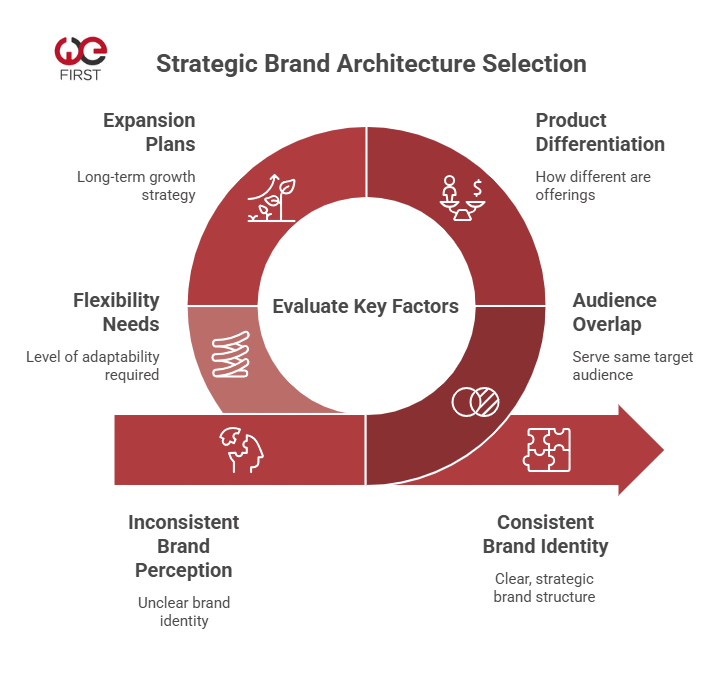
You need to consider how you want your brand to be perceived and how you plan to grow in the future. The decision should not be based on trends—it should be based on strategy.
Key factors to evaluate include:
- Whether your offerings serve the same audience
- How different your products or services are
- Your long-term expansion plans
- The level of flexibility you need
A strong structure ensures that your brand remains consistent while allowing room for growth.
What Is a Brand Portfolio Strategy and Why Is It Important?
A brand portfolio strategy defines how all your brands and offerings work together as a system. It ensures that each part of your business has a clear role and does not compete with or confuse the others.
Instead of managing products individually, you manage them as a connected portfolio.
This approach helps you:
- Avoid overlap between offerings
- Clearly define the role of each product or service
- Strengthen your overall market presence
- Make better investment and growth decisions
For leadership teams, this creates a more focused and efficient way to scale the business.
How Does Brand Architecture Impact Customer Experience?
Customers do not see your internal structure—they see your brand as a whole. If your architecture is unclear, their experience becomes confusing.
A strong brand architecture makes it easy for customers to:
- Understand what you offer
- Navigate between products or services
- Trust new offerings
- Build a long-term relationship with your brand
Clarity leads to confidence. When customers clearly understand your brand, they are more likely to engage, purchase, and stay loyal.
How Can Leaders Build a Strong Brand Architecture Strategy?
Building a strong brand architecture strategy starts with clarity and alignment at the leadership level.
You need to define how your brand should grow and how each offering fits into that vision. This requires both strategic thinking and practical planning.
The process typically involves:
- Defining your core brand purpose
- Mapping all existing products and services
- Identifying gaps or overlaps
- Choosing the right architecture model
- Aligning messaging across all touchpoints
Working with experts in Brand Strategy Consulting can help ensure that your structure is both strategic and scalable.
What Are the Common Mistakes in Brand Architecture?
Many organizations overlook brand architecture until confusion starts to affect growth. By then, fixing it becomes more complex.
Common mistakes include:
- Adding new products without a clear structure
- Creating too many disconnected brands
- Not aligning architecture with business strategy
- Ignoring customer perspective
- Failing to maintain consistency across offerings
Avoiding these mistakes can save time, reduce costs, and strengthen your brand over the long term.
How Does Brand Architecture Connect with Overall Brand Strategy?
Brand architecture is not separate from your brand strategy—it is a core part of it.
While strategy defines what your brand stands for, architecture defines how that is expressed across your offerings.
When both are aligned:
- Your messaging becomes consistent
- Your brand becomes easier to understand
- Your growth becomes more structured
This alignment ensures that every product, service, and communication strengthens your brand rather than diluting it.
What Does the Future of Brand Architecture Look Like?
As markets become more competitive and customer expectations rise, brand clarity will become even more important.
Companies will need to simplify their structures, focus on clear messaging, and ensure that every offering adds value to the overall brand.
Future-ready organizations will:
- Focus on clarity over complexity
- Align all offerings with a clear purpose
- Build flexible structures that support growth
- Continuously refine their brand portfolio
Those who invest in strong brand architecture today will be better positioned to scale tomorrow.
Conclusion: Why Should Leaders Prioritize Brand Architecture Strategy?
Brand architecture is not just about organizing brands—it is about building a foundation for growth.
For founders, CEOs, CTOs, and leadership teams, it provides clarity, direction, and control. It ensures that every new initiative strengthens your brand instead of creating confusion.
When done right, a strong brand architecture strategy helps you grow with confidence, communicate with clarity, and build lasting trust with your customers.
In a world where attention is limited and competition is high, clarity is your strongest advantage.