

Blog
ESG Branding Strategy: Turning Sustainability Into Competitive Advantage
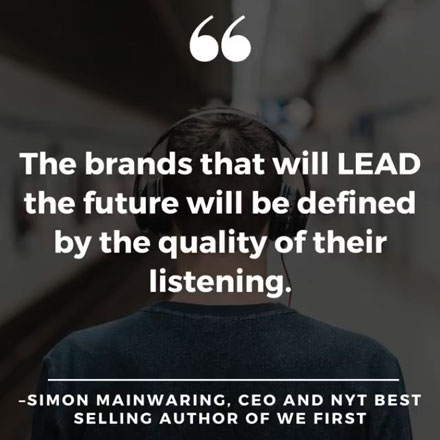
Simon Mainwaring wrote in “We First” that the future of profit is purpose. That was 2011. Most companies have since absorbed the premise. What they have not yet absorbed is the discipline that follows from it.
Purpose without structure is a press release. What the moment demands now is a deliberate, operationally grounded ESG branding strategy that converts genuine commitments into measurable competitive distance. Not a campaign. Not a pledge. A system.
The brands that earn the next decade will earn it because they built that system, told an honest story about it, and invited their communities into something larger than a transaction. That is the real meaning of turning sustainability into a competitive advantage.
Why ESG Branding Strategy is No Longer Optional for Growth-Oriented Companies
Something fundamental has changed in how markets assign value to brands. According to the 2024 Edelman Trust Barometer, 63% of consumers now buy or advocate for brands based on their values and beliefs. Business has become the most trusted institution globally, ahead of government and media. That is not a reward for good intentions. It is a mandate to lead.
Companies that handle their ESG branding strategy as a compliance exercise or treat it as a communications layer sitting on top of business-as-usual are misreading the moment badly. The market is grading on a new curve, and the graders are employees, investors, consumers, and regulators, all at once, and none of them grade on a curve.
The Trust Gap is the Business Gap
The Edelman data makes one point especially hard to ignore: trust is now the second-most important purchase driver globally, behind only price and value. Most leadership teams hear that and think marketing. The ones getting it right think operations.
Trust is not built in a campaign. It accumulates in the daily record of choices that are either consistent with what a brand has declared itself to be, or not. When Unilever launched its Sustainable Living Plan, Paul Polman did not hand it to the communications team. He restructured the business model around it, tying sourcing, supply chain, and investor communications to concrete commitments. A decade later, Unilever’s sustainable brands were growing 69% faster than the rest of the portfolio, per the company’s own reporting. Trust was not supporting the business. Trust was the engine of it.
For ESG-focused companies, that is the frame that matters. Your sustainability branding strategy is not a story you tell. It is the story your operations write every single day, in choices that are either consistent with your declared values or not.
When ESG Becomes Brand Architecture, Not Afterthought
Mainwaring has made this argument consistently, in his Forbes column and throughout the “We First” framework: purpose cannot live in the marketing department alone. It has to be load-bearing. It has to hold up the entire structure, culture, product, leadership behavior, investor narrative, and community relationship, all of it.
The companies with the most durable sustainability positioning are the ones where ESG is not a campaign. It is the category they have built for themselves. Patagonia did not add environmentalism to an outdoor gear brand. Environmental responsibility is the reason the company exists. That distinction, between sustainability as identity versus sustainability as attribute, is exactly where most brands lose ground over time.
Just Capital’s 2024 rankings make the business case for this plainly. Companies scoring highest on stakeholder capitalism metrics, those genuinely treating workers, communities, and the environment as core constituencies rather than afterthoughts, also score higher on long-term revenue performance and brand equity. The correlation is no longer a theory. It is structural, and it is showing up in the numbers.
The Anatomy of a Winning ESG Brand Positioning
Getting the positioning right starts with understanding what it actually is. ESG brand positioning is not a tagline decision. It is a worldview decision. It asks a company to declare not just what it makes but why the world is meaningfully better because it exists. That declaration has to be legible in the product, the culture, the partnerships, and the strategic narrative the company carries into every stakeholder conversation.
Values as the Operating System, Not the Marketing Layer
The central argument in Mainwaring’s “We First” model is this: capitalism, when structured around shared prosperity rather than shareholder extraction, produces better outcomes for business and for humanity. The brands that have truly operationalized this are not doing well at the margins. They are running different operating systems entirely.
Bombas built its one-for-one model directly into its supply chain before building a single marketing campaign around it. By 2023, the company had donated more than 75 million items to people experiencing homelessness, per its own impact reporting. That figure is not a marketing metric. It is evidence that the operating system is working. And it has become one of the strongest conversion drivers in Bombas’s direct-to-consumer business, because the consumer can verify it independently.
TOMS followed a parallel path, first with its original one-for-one shoe donation model, later with its pivot to directing one-third of profits to grassroots organizations. The lesson in both cases is the same. When an ESG commitment is embedded in the economics of the business, not adjacent to them, it creates a brand integrity that no advertising spend can manufacture. You cannot fake the math.
For ESG-focused companies doing the serious work of culture and performance alignment, the real question is not “how do we communicate our ESG story?” It is “are our values so embedded in how we operate that the story tells itself?”
What Patagonia, Allbirds, and Tony’s Chocolonely Teach Us About Depth
Three companies that Mainwaring returns to repeatedly in his work illustrate what it looks like when brand positioning around ESG goes all the way down to the bone.
Patagonia’s “Don’t Buy This Jacket” campaign ran in The New York Times on Black Friday, asking consumers to buy less, consider environmental cost, and repair what they already owned before buying new. This was not a stunt. It was the expression of a value system confident enough in its own coherence to ask customers to spend less. That confidence built exactly the kind of tribe Mainwaring describes in “We First,” people who feel they belong to a movement rather than a customer list.
Allbirds, the carbon-neutral footwear brand, put its carbon footprint score directly on its product labels, prominently, as a buying signal rather than a disclaimer. B Lab data shows that Allbirds’ B Corp certification, combined with radical transparency on environmental impact, drove a premium pricing tolerance in its core customer base that conventional footwear brands could not replicate. The certification is not a badge. It is a standing contract with the community the brand serves.
Tony’s Chocolonely, the Dutch chocolate brand committed to ending slavery and illegal child labor in the cocoa supply chain, built its entire brand narrative around a systemic injustice it has declared an intention to eliminate. The company’s annual report is published as the “Tony’s Chocolonely Annual Fair Report,” and the mission runs through every product decision the company makes. That is not sustainability as an overlay. That is sustainability as the reason for being.
Building a Sustainability Branding Strategy That Moves Markets
A sustainability branding strategy earns the ability to move markets when it operates at three levels at once: internal, meaning culture and operations; external, meaning community and stakeholder communication; and systemic, meaning industry and policy influence. Most brands reach the second level and stop. The ones that reach the third become category definers. The gap between those two outcomes is usually not resources. It is commitment.
From Reporting to Storytelling: The Narrative Shift That Matters
ESG reporting has expanded dramatically. The Global Reporting Initiative, the Sustainability Accounting Standards Board, and the International Sustainability Standards Board have each built frameworks that companies use to disclose environmental, social, and governance performance. The problem is not the frameworks. The problem is that reporting is compliance, and compliance is not connection.
Mainwaring’s thought leadership work returns to this gap consistently. The brands that convert ESG data into brand equity know how to translate a metric into meaning. Ben & Jerry’s does not just report on its Fairtrade sourcing. It writes flavor names, runs active advocacy campaigns, and speaks loudly about the political and social conditions that make its sourcing decisions necessary. The brand operates as a civic actor, not a confectionery company that happens to have good sourcing.
That civic posture is what Mainwaring calls “leading with humanity.” It positions the brand not as a vendor of goods but as a genuine participant in the life of the communities it serves. And it generates the kind of social capital that no advertising budget can replicate or replace.
For companies building their sustainability branding strategy right now, the discipline is concrete: take your strongest ESG proof point and ask not only “what does this say about our performance?” but “what does this say about what we actually believe?” Build the narrative from the belief outward, through the data, into the story that the community can carry.
Stakeholder Capitalism in Practice: Who You Serve Defines What You’re Worth
The Business Roundtable’s 2019 Statement on the Purpose of a Corporation was a genuine inflection point. One hundred and eighty-one CEOs signed a document declaring that corporations exist to serve all stakeholders, not only shareholders. What that declaration opened up was a strategic question every ESG-focused company still has to answer honestly: who, specifically, are your stakeholders, and what is your real commitment to each of them?
This is where conscious capitalism and stakeholder capitalism stop being philosophy and start being brand strategy. Just Capital ranks the largest U.S. companies annually on how well they serve workers, customers, communities, the environment, and shareholders. In 2024, companies in the top quartile of Just Capital’s rankings generated median returns of 6.1% over five years, compared to 3.6% for those in the bottom quartile. Doing right by stakeholders is not charity. It is a compounding advantage that shows up in the return data.
The companies that build this understanding into their stakeholder trust practice grasp something that slower-moving competitors miss: every stakeholder group is also an audience. Your workers are either brand ambassadors or brand detractors. Your suppliers are either proof points or liabilities. Your community relationships are either stories waiting to be told or scandals waiting to surface. A genuine ESG branding strategy maps those relationships with intention, not wishful thinking.
Read more about Stakeholder capitalism
How ESG Branding Strategy Converts Into Measurable Competitive Advantage
The objection that comes up most reliably in leadership conversations about ESG investment is this: Where is the return? It is the wrong question framed the right way. The better question, the one that actually changes the strategic calculus, is “What is the compounding cost of not having a credible ESG position in a market where your employees, investors, customers, and regulators are all watching?”
The Employee and Investor Signal
The labor market has issued a clear verdict. A 2023 Deloitte survey found that 40% of Gen Z and Millennial workers have already turned down a job or assignment because of ethical concerns, and 54% of Millennials say they feel more loyalty to companies that take a genuine stance on environmental and social issues. These are not outliers. They are the majority of the professional workforce entering its prime earning years.
Talent is the most expensive asset any company carries. The Society for Human Resource Management estimates that recruiting, onboarding, and replacing a single employee costs between half and two times that person’s annual salary. A brand position that makes your company genuinely desirable to values-aligned talent is not a soft benefit with no business case. It is a hard cost reduction with a calculable number attached to it.
On the investor side, B Lab data shows that Certified B Corporations access capital at lower cost and with greater frequency from impact investors, who now manage over $1.5 trillion in assets globally, according to the Global Impact Investing Network’s 2023 report. BlackRock, Vanguard, and State Street have each formalized ESG criteria into their proxy voting guidelines. How your company is positioned on ESG is now a material factor in your cost of capital. That is the new baseline.
B Corp Certification as Brand Proof, Not Brand Badge
Mainwaring has written at length about the importance of third-party verification in a trust-scarce environment. The argument is not complicated: in a world where consumers, employees, and investors are skeptical of self-reported claims, independent verification is not a nice addition to your ESG narrative. It is the thing that makes the narrative credible.
B Corp certification, administered by B Lab, puts companies through a rigorous assessment covering social and environmental performance, accountability, and transparency. More than 7,500 companies across 90 countries had earned the designation as of 2024. What the certification communicates is not that a company is perfect. It communicates that the company is serious enough about its commitments to have them measured by someone other than itself. In an environment where the Edelman Trust Barometer shows that “a person like me” is trusted more than a CEO, outside verification carries real social capital.
For companies working through the B Lab certification process, the discipline the assessment demands, mapping governance, worker treatment, community impact, environmental stewardship, and customer relationships against one integrated standard often produces something valuable beyond the certification itself. It produces clarity. A company that has genuinely done the B Lab work knows where its ESG commitments are structural and where they remain aspirational. That honest accounting is the foundation on which any credible long-term brand position has to be built.
The competitive signal is also worth noting. In categories where one or two brands carry B Corp status and the rest do not, the gap in perceived trust, pricing tolerance, and talent attraction is already measurable. The window to be early in many of those categories is still open. But it will not stay open.
Bonus read: The difference between ESG and sustainable investing.
The Movement Imperative: Where ESG Branding Strategy Becomes Real
Simon Mainwaring opens “We First” with an observation that has only grown more relevant in the years since: we are living through the collision of two forces, a crisis of capitalism and an explosion of connectivity. Together, those forces have created an opportunity no previous generation of business leaders has had. The chance to rebuild the relationship between business and society on genuinely better terms.
An ESG branding strategy is not the whole of that rebuilding. But it is where the rebuilding becomes visible. It is where the values a company holds become the story a community shares, and where the story a community shares becomes the movement that carries a brand forward into the future it is actually trying to build.
The companies that will define the next decade are not sitting still, waiting for regulation to force the question or for consumer demand to reach some theoretical peak. They are building right now. Building the narrative. Building trust. Building the stakeholder relationships and the operational proof that their commitments mean something real.
We have the tools for this. We have the frameworks. We have the examples, from Patagonia to Bombas to Tony’s Chocolonely, of what it looks like in practice when a company decides that shared prosperity is not a constraint on growth but the actual engine of it.
The only question left is whether your ESG brand positioning is something you are actively building or something you are hoping competitors do not build first.
If you are ready to build, we are ready to help.